
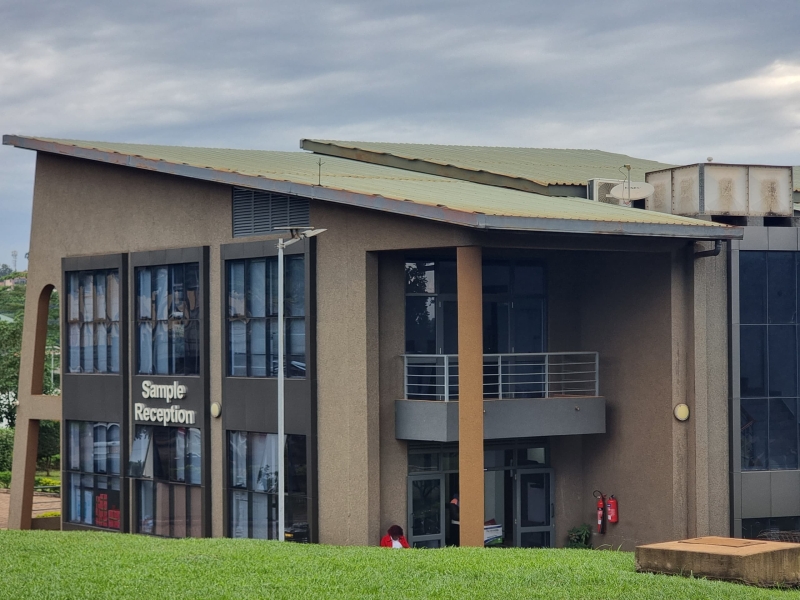
Uganda’s Invisible Shield , How Anonymous Codes, Laser-Precision Machines and 10-Day Results Protect Millions from Hidden Poisons.
Deep inside a nondescript building in Bweyogerere, Kira Municipality Wakiso district , a handful of scientists in white coats are quietly doing something revolutionary: they are making sure the milk you buy, the maize flour your family eats, and the soda your child drinks will not slowly poison you.
On a recent guided media tour of the Uganda National Bureau of Standards (UNBS) Chemistry Laboratory, Deputy Head Eve Namutebi pulled back the curtain on a world most Ugandans never see – yet one that touches every household in the country every single day.
It is a small detail with enormous consequences. In a country where corruption can taint everything from medicine to cooking oil, UNBS has built a system that removes human bias almost entirely.
Samples first land at the main reception desk, where Duncan Mugume and his team perform a ritual that has become the gold standard of efficiency. Payment is verified; the sample is logged into the Laboratory Information Management System (LIMS), assigned a unique code, and automatically routed to the correct laboratory – chemistry, microbiology, or even electrical testing.
Once approved, clients receive an automated email with the full certificate of analysis. No need to come back. No long queues. No “facilitation” money. Transparency delivered at the click of a button.
Walk through a heavy door into the chilled storage room and the temperature drops instantly. Here sit crates of fresh vegetables, milk, yogurt, fish and chicken – all waiting to be dissected by science.
In one corner, analysts hunt for antibiotic residues in vegetables and tetracycline in chicken – the very drugs farmers sometimes overuse to make birds grow faster. A single machine, which Namutebi calls “very, very valuable,” does triple duty: it confirms antibiotic residues in fruits and vegetables, detects illegal preservatives in drinks, and measures pesticides, herbicides and deadly mycotoxins.
Some tests happen in windowless, light-controlled rooms. Why? Because sunlight can destroy mycotoxins during preparation, turning accurate science into guesswork.
Namutebi draws a sharp line that every consumer should understand.
Take alcoholic drinks. Quality testing checks whether a bottle labelled 40% alcohol actually contains 40%. “If you pay for 40% and get only 30%, that is cheating,” she says.
Safety testing, however, looks for something far more sinister: methanol. The invisible killer that can cause blindness, nervous damage or death.
In non-alcoholic beverages the laboratory hunts for unintended alcohol, excessive sugar, caffeine levels and undeclared sweeteners. “Some drinks are sweet but sugar-free,” she explains. “Labels must declare caffeine so allergy sufferers know exactly what they are buying.”
Down the corridor, analyst Janina Ahumuza opens the door to the Microbiology section. Visitors must change into full lab attire in a dedicated changing room – no exceptions.
The Chemistry Laboratory carries the prestigious accreditation of the South African National Accreditation System (SANAS) a mark recognized across Africa and beyond. It means Ugandan test results are trusted in international markets.
The lab routinely screens for heavy metals lead, mercury, arsenic in both food and cosmetics. These invisible contaminants have been linked to cancer, kidney failure and developmental problems in children. By catching them before products reach supermarket shelves, UNBS is literally saving lives.
The laboratory also advises industries on how to improve. When a manufacturer learns its product fails a test, UNBS does not just reject it; it explains why and how to fix the problem. The result is better local products and stronger exports.
In an era when fake medicines, adulterated cooking oil and pesticide-laden vegetables make headlines across the continent, Uganda’s UNBS has quietly built one of the most transparent, technology-driven quality systems in East Africa.
From the moment a farmer’s maize sample is coded at reception to the instant a digital certificate lands in an exporter’s inbox, every step is designed to protect the consumer, punish fraudsters and open global markets for honest Ugandan businesses.
As Eve Namutebi guided journalists through her spotless laboratories, she never once used the word “hero.” But the evidence was everywhere: in the chilled rooms keeping milk safe, in the light-proof chambers protecting delicate test results, and in the quiet pride of scientists who know their work stands between ordinary Ugandans and invisible poisons.
In a country racing toward middle-income status, these laboratories are not just testing products. They are testing Uganda’s future one anonymous sample at a time.










Disqus comments error!
Disqus shortname is required to use Disqus comments. Please ensure you have specify a valid registered Disqus shortname.