
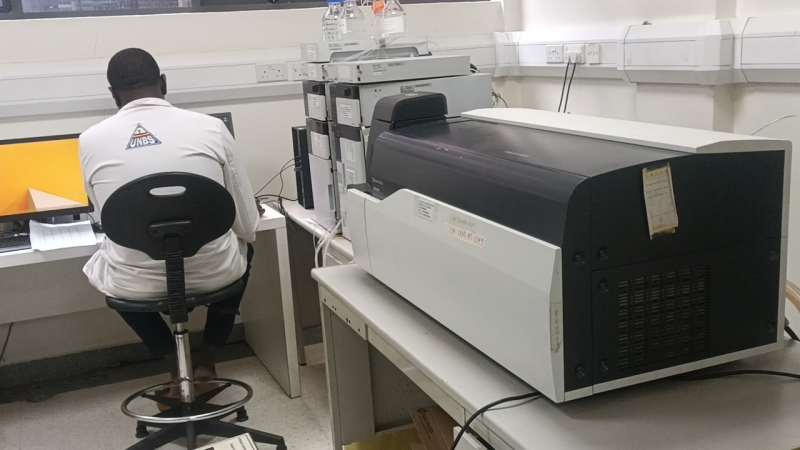
Behind the doors of the Uganda National Bureau of Standards (UNBS) lies a silent shield protecting consumers from invisible threats in everyday products, from cancer-causing toxins in maize to deadly methanol in alcohol and banned antibiotics in chicken.
In a recent visit to the main UNBS chemistry laboratory Bweyogerere Kira Municipality wakiso district , with journalists across the country , Eve Namutebi, Deputy Head of the Chemistry Lab, walked journalists through the careful steps that ensure products on Ugandan shelves are safe and honestly labeled.
“When a client brings a sample, they don’t come back for the certificate,” Namutebi explained. “They just give an email address. Once testing is complete and verified, the certificate is sent automatically to that email.”
Namutebi added that to keep the process fair and unbiased, samples are given anonymous codes at the main reception. Technical staff like Namutebi never knows who submitted them. Analysts then check the sample’s condition and quantity before logging it into the Laboratory Information Management System (LIMS), which tracks everything and limits access based on staff roles.
She furthermore says that In chilled rooms, perishables such as milk, yogurt, fish, and vegetables wait for testing. Here, experts hunt for antibiotic residues in vegetables and drug residues, like tetracycline – in chicken tissues, a frequent issue in poultry.
Special machines confirm antibiotic traces in fruits, detect preservatives in drinks, and measure pesticide and herbicide leftovers that can linger in soil and crops. The lab excels at mycotoxin testing, especially aflatoxins in cereals and ochratoxins in coffee. Some work happens in windowless rooms because light can ruin mycotoxin samples during preparation.
Namutebi stressed the difference between quality and safety checks. For beer or spirits, quality means verifying the alcohol percentage matches the label on short-changing customers. Safety means screening for methanol, a toxic alcohol byproduct that can blind or kill. “Methanol is dangerous,” she warned. “We don’t expect any in your product.”
In the microbiology section, analyst Janina Ahumuza described strict rules: visitors change clothes and shoes to avoid contamination. Samples of cosmetics, drinks, spices, and honey are stored properly frozen in refrigerators then tested for harmful microorganisms to confirm they are safe to eat or use.
At sample reception, Duncan Mugume noted that most samples come from product certification, walk-in clients, imports, or market surveillance raids. The rule is first-in, first-out, with most results ready in 10–20 working days.
Through anonymous handling, automated results, specialized equipment, and dedicated teams, UNBS works to stop contaminated or mislabeled goods from reaching homes and markets. As Namutebi showed, this behind the scenes work fights health risks, protects consumers from cheating, and helps Ugandan products meet global standards for trade.










Disqus comments error!
Disqus shortname is required to use Disqus comments. Please ensure you have specify a valid registered Disqus shortname.