
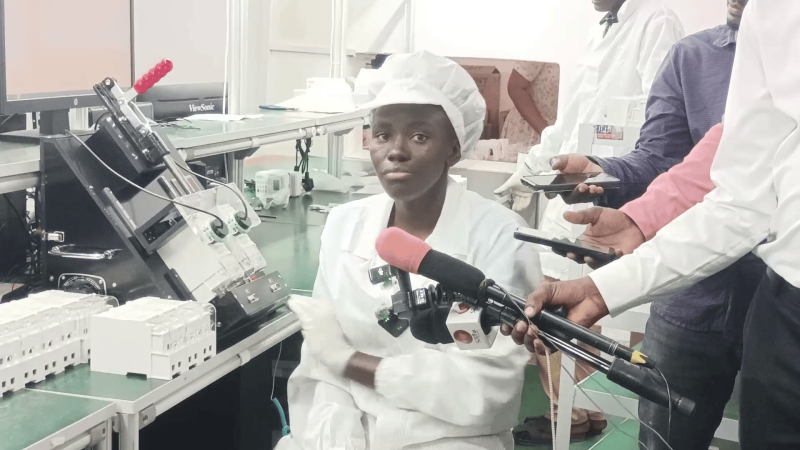
As Uganda prepares to commemorate International Labour Day on Friday, May 1, 2026, under the theme “Safeguarding Uganda's Progress: Empowering the Workforce and Promoting Decent Work for Competitive Enterprises,” the true test of this vision is unfolding 200 kilometers east of Kampala. With H.E. President Yoweri Kaguta Museveni set to lead national celebrations at Bishop Nkoyoyo Primary School, Matale Grounds in Buikwe District, we took a tour of the Mbale Sino Industrial Park—a flagship project of the government’s industrialisation agenda—to gauge the pulse of the Ugandan worker.
The park, a sprawling hub of manufacturing currently hosting 82 factories, 62 of which are operational, stands as a concrete symbol of the government’s belief that factories can fundamentally transform Uganda’s economic system. It directly employs 13,500 people and indirectly supports over 200,000 livelihoods. But beyond the statistics, it is a place of stark contrasts: a landscape of life-changing opportunity shadowed by the absence of a minimum wage, infrastructure bottlenecks, and the reliance on government procurement.
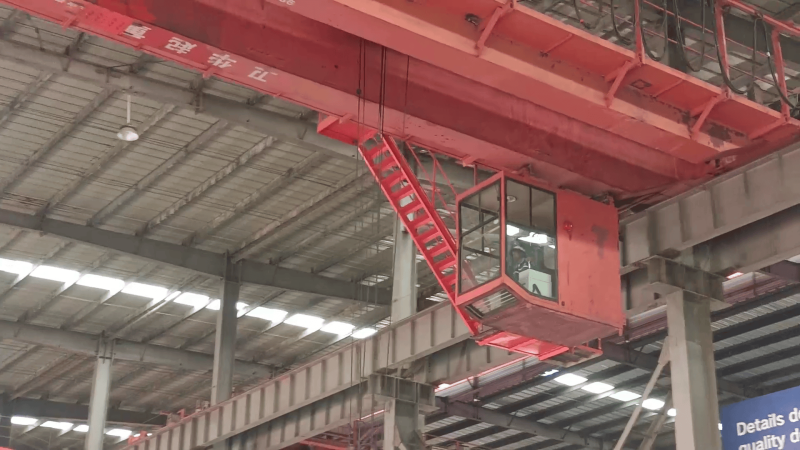
Among the towering steel frames and the hum of heavy machinery, we found 22-year-old Logose Beatrice. A Senior Three dropout, Beatrice represents the face of workforce empowerment the government is championing. She confessed that before the park opened its doors, her future was a closed one.
"Being a school dropout, I never imagined anyone could employ me at all," Beatrice recounted, her voice competing with the industrial din. "But when I came to Sino Mbale, I was given skills in a steel factory. This is a sector that needs a lot of energy; I never thought I, as a young woman, would do anything here. But as I talk now, I can operate a crane and other heavy machines."
Beatrice’s story embodies the "skills empowerment" pillar of this year’s Labour Day theme. However, when the conversation shifted to her salary, her gratitude gave way to a pragmatic silence. She acknowledged that her take-home pay is modest.
"Yes, I may not be earning a lot, but the skills I am getting are a life changer for me. Therefore, I can't look at money for now," she said.
Her situation highlights a critical gap in Uganda’s labour landscape: the absence of a government-set minimum wage, leaving employers with the discretion to determine pay. For many workers like Beatrice, the acquisition of transferable skills is currently traded off against immediate financial reward, a reality that poses a long-term question for the promotion of truly "decent work."
A few blocks away, in the immaculate confines of Chint, a Global company, Naguti Breada described a different kind of empowerment—safety. Dressed in full protective gear, Breada noted that while the working conditions are demanding, the formal structure of her employment provides a safety net that is rare in Uganda’s largely informal economy.
"As a labourer, I am given protective gear which keeps my life safe as I work," Breada explained, pointing to her helmet and steel-toed boots. "The working conditions may not be the best, but at least we are protected in our jobs since we have contracts with the company."
Her testimony underscores the government’s push for formalisation and safety in the industrial sector, a key aspect of promoting decent work for competitive enterprises.
However, the competitiveness of these enterprises is not without its hurdles. Namudu Lydia, an inventory manager at a factory producing electricity meters, revealed a paradox of capacity versus demand. Her factory is a marvel of efficiency, capable of producing roughly 1,000 units daily. Yet, it operates far below its potential.
"The only challenge is that we have less orders from government. At times we get less orders, and this makes us work less and employ fewer people, yet we have enough room for more," Lydia explained. "Right now, we have a 55,000-unit order from the government, and trust me, this may be done so fast. We just pray that government connects more people to electricity so that we can get more orders."
Her plea ties the labour question directly to national policy on rural electrification, demonstrating how job security in the industrial parks is deeply intertwined with government procurement and infrastructure expansion.
Mr. Kenedi Mushemeza, the Communications Head at Sino Industrial Park, offered a panoramic view of the park’s journey and its future needs. He celebrated the 13,500 direct jobs but was candid about the growing pains. For years, the park has grappled with power instability due to the heavy machinery demands. "Government has tried its best to improve on electricity, and we are seeing progress," he noted.
A more existential threat has also been addressed. Five years ago, devastating floods swept through the park. Mushemeza confirmed that the government has since promised to construct a robust water channel to safeguard the multi-billion-shilling investment from future disasters.
Yet, his most urgent request was logistical. The Kenya-Uganda railway line, a historic artery of East African trade, passes just a few kilometers from the park.
"We ask the government to connect the industrial park to the railway line from Kenya," Mushemeza appealed. "Since the lines pass just a few kilometers away, this would boost our transportation of goods from Mombasa. It would cut logistics costs drastically and make us truly competitive."
As President Museveni takes to the podium in Buikwe this Friday, the stories from Sino Mbale Industrial Park will likely be the subtext of his address. The park is a testament to youth employment and skill transfer, turning school dropouts into machine operators. Yet, the celebration of progress is also a call to action: to bridge the gap between empowerment and a living wage, to connect factory output to government demand, and to link these engines of production to the regional railway network. For Uganda’s workforce, safeguarding progress means not just creating jobs, but ensuring they are decent, secure, and connected to the market.
End







Disqus comments error!
Disqus shortname is required to use Disqus comments. Please ensure you have specify a valid registered Disqus shortname.