
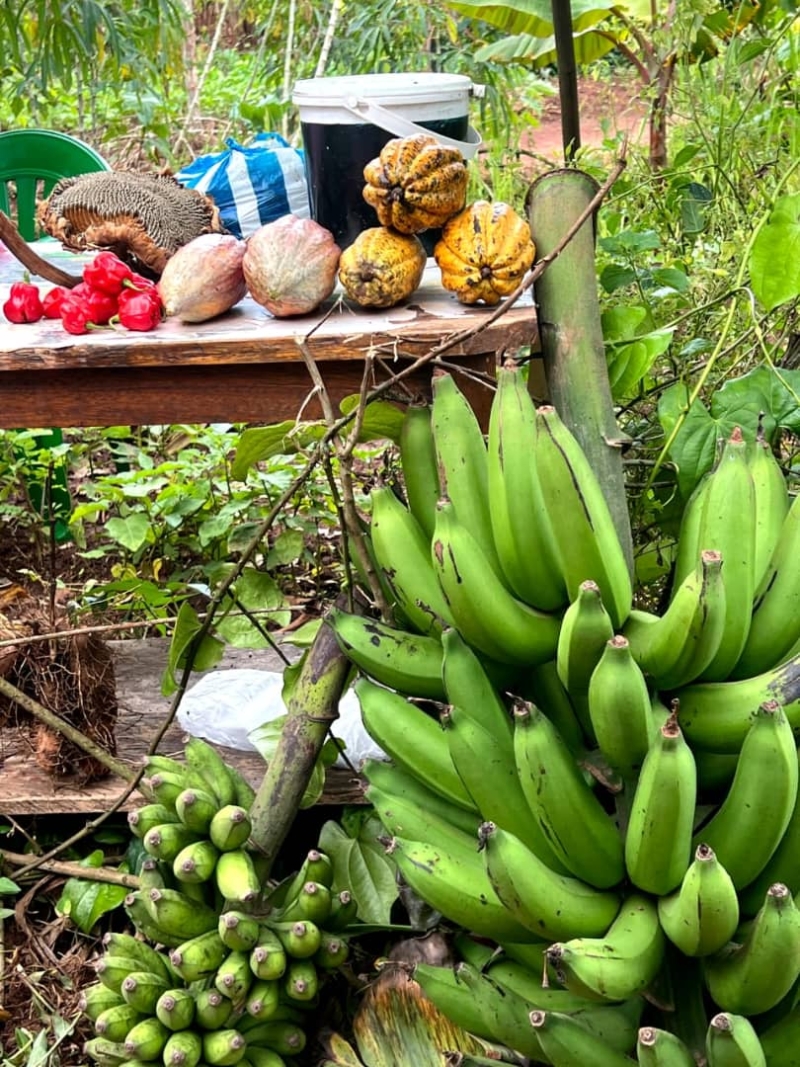
Community seed banking is increasingly emerging as a powerful, collective approach to preserving indigenous seeds and strengthening agroecolougy. Agroecological actors emphasize that supporting farmers to establish and manage community seed banks is not merely a conservation strategy, but a key catalyst for amplifying agroecological practices and ensuring food sovereignty.
This was a focus during the two-day 5th Agroecology Learning Exchange organized by Slow Food Uganda in Mukono District. The exchange brought together agroecology practitioners,including farmers, chefs, teachers, youth, researchers, and community leaders to share knowledge, experiences, and practical solutions for safeguarding indigenous seed systems.
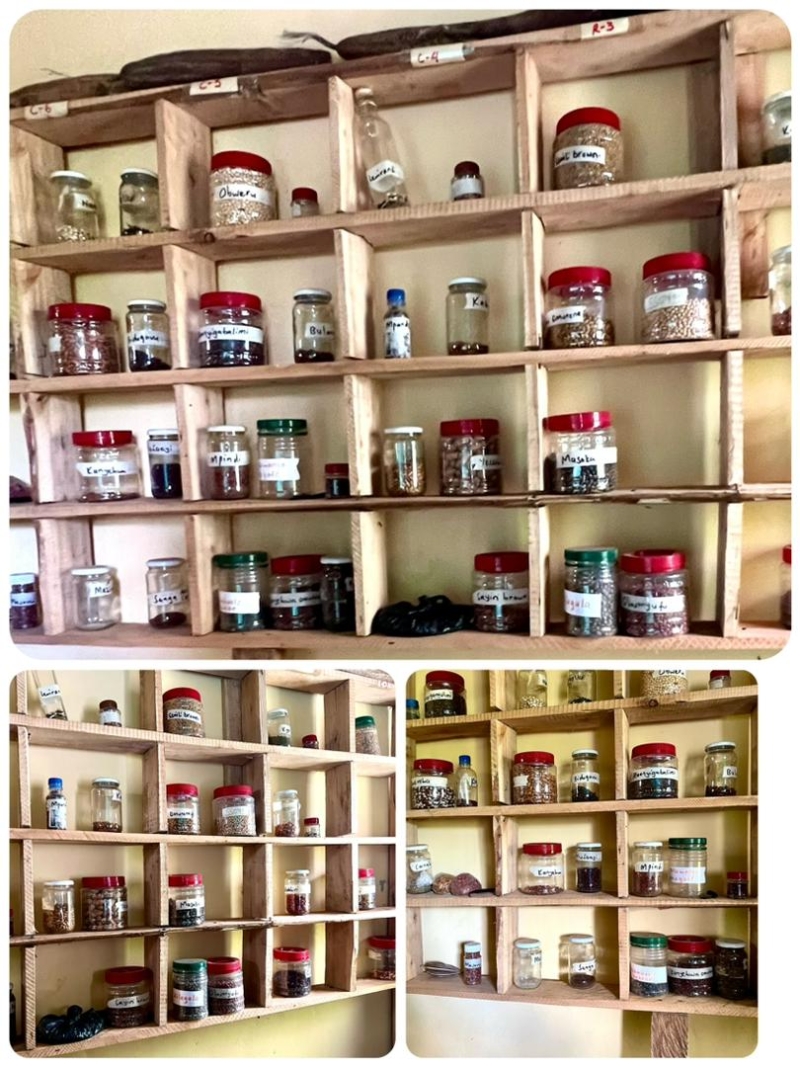
As part of the cross-learning exchange, participants visited several farms, including the Nakatyaba Community Seed Bank, a vibrant example of community-led seed conservation in action. The visit provided participants with hands-on exposure to how local communities are taking responsibility for preserving their seed heritage.
Participants also visited Nansubuga Farm in Banda Nakisuga, Mukono District, owned by Jane Nansubuga. There, they explored practical approaches to pest and disease management, soil health improvement, organic fertilizer production, and crop–animal integration. The learning experience placed strong emphasis on animal welfare, farm synergy, and diversification as key pillars of sustainable agroecological farming.
Jane Nansubuga, a passionate former teacher who transitioned into farming after 22 years in the education profession, shared her inspiring journey with the participants. She explained that her decision to venture into farming was deeply rooted in her desire to reconnect with nature and to build a meaningful, lasting legacy for her family—one that could be inherited and sustained beyond her teaching career.
During the session, she guided participants through practical methods of integrating crops and livestock in ways that maximize mutual benefits. She encouraged farmers to start small and scale up gradually, allowing them to learn, adapt, and build resilience over time. She emphasized the importance of diversification, not only to improve food and nutrition security but also to reduce risks associated with pests, diseases, and market fluctuations.
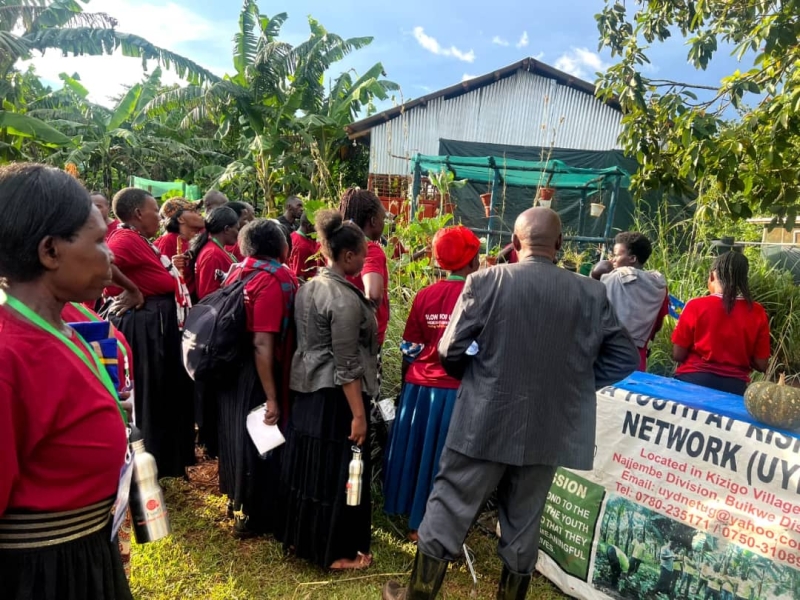
Jane also highlighted the need to care for the environment by maintaining healthy soils, recycling farm resources, and minimizing waste. She demonstrated how farm by-products such as animal manure and crop residues can be effectively reused to produce organic fertilizers, thereby closing nutrient cycles and reducing dependence on external inputs.
At the Nakatyaba Community Seed Bank, farmers demonstrated how they collect, select, process, and store indigenous seeds such as beans, millet, sorghum, and local vegetables. Emphasis was placed on maintaining seed quality, ensuring proper storage conditions, and documenting seed varieties to preserve their unique characteristics.
Mr. Mugalu Dauda, who oversees the Nakatyaba Community Seed Bank, explained that the core objective of seed saving is to protect indigenous varieties. He emphasized that the most effective way to conserve seeds is through continuous cultivation in the garden, which allows them to be multiplied and sustained over generations.
He noted that indigenous seeds are at risk of extinction due to the increasing dominance of industrial seed varieties on the market. This realization motivated the community to take action by initiating seed-saving practices and establishing a community seed bank.
Hussein Ssebaduka, Program Director for Agroecology and Biodiversity Conservation at Slow Food Uganda, explained that the purpose of the training was to equip farmers with the knowledge and practical skills needed to adopt sustainable farming practices, while addressing the challenges associated with transitioning away from conventional farming methods that rely heavily on chemicals.
John Kiwagalo, Head of Programmes at Slow Food Uganda, highlighted a growing shift in attitudes toward food production. He noted that increasing commercialization has led many people to prioritize profit over environmental sustainability and consumer health.
He also pointed out that many young people today pay little attention to making informed food choices, often consuming food without considering its impact on their health. He emphasized that these challenges are among the key issues the organization is working to address.
Justine Membe, one of the participants, shared a personal testimony. She explained that the use of chemical pesticides had previously caused serious health issues in her family, including the death of a member due to chemicals that entered his bloodstream. Because of this experience, she has fully embraced indigenous and organic farming methods, which she says are safer for both farmers and consumers.
Hannington Kisakye, an advocacy officer at Slow Food Uganda involved in promoting good agricultural practices and policies, emphasized that the organization’s mission is to ensure Ugandans have access to clean, safe, and nutritious food that supports good health. This is why they gather to exchange knowledge and learn how agroecology can be amplified.
Through this learning visit, agroecological actors gained practical knowledge on preserving indigenous seeds through community-based seed banking, while promoting biodiversity as a central pillar of resilient and sustainable food systems.











Disqus comments error!
Disqus shortname is required to use Disqus comments. Please ensure you have specify a valid registered Disqus shortname.