
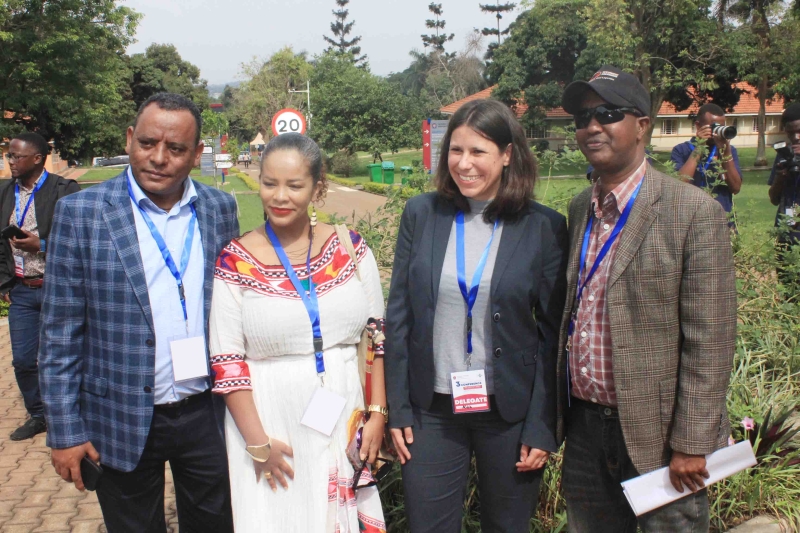
Uganda Christian University (UCU) in Mukono is hosting a five-day conference marking the final phase of the Communicating Migration and Mobility, E-learning Programs and Newsroom Application for Sub-Saharan Africa (COMPASS) project, an initiative aimed at strengthening digital journalism and improving migration reporting across the continent.
The European Union–funded project seeks to support digital transformation in African higher education by developing an e-learning curriculum focused on media coverage of migration and mobility. The conference has brought together journalism researchers, lecturers, editors, reporters, writers, and educators from Africa and Europe to reflect on how refugees and displaced persons are portrayed in the media and how digital learning tools can improve the quality of reporting.
While officially opening the conference, the Vice-Chancellor of Uganda Christian University, Prof. Aaron Mushengyezi, said the gathering was timely, noting that migration remains one of Africa’s most pressing challenges. He emphasized the need for truthful, accurate, and humane reporting on refugees and displaced people.
Prof. Mushengyezi strongly criticized leaders in some countries who restrict journalists from reporting on conflicts and wars, arguing that such actions undermine press freedom and deny citizens access to justice. “When journalists are stopped from doing their work, the world is prevented from knowing what is really happening on the ground,” he said. “This silence often worsens conflicts and fuels forced migration.”
He added that understanding the root causes of displacement is essential for leaders to know where and how to intervene, urging journalists to play their role responsibly by telling stories that reflect reality rather than stereotypes.
Prof. Monica Chibita, a journalism lecturer involved in the project, said discussions have already begun on how journalists should be trained to cover migration issues more effectively. She noted that the COMPASS project is increasingly relying on e-learning approaches, despite challenges such as limited internet access and digital skills gaps in some institutions.
The keynote speaker, Prof. Ralph Akinfeleye from the World Journalism Education Congress, expressed concern that stories about refugees and displaced persons are often neglected by the media. He observed that editors tend to prioritize politics, corruption scandals, and breaking news, yet the refugee crisis continues to have a profound impact on the African continent.
Meanwhile, the Head of Development Cooperation at the German Embassy in Uganda, Alicia Van Den Boom, challenged journalists to embrace research and modern technology in their work. She said digital tools and data-driven journalism can help improve the depth, accuracy, and impact of migration reporting.
The conference has attracted participants from six African countries—Uganda, Kenya, Nigeria, Somalia, Malawi, and Burkina Faso—as well as partner universities from Germany and Portugal. Institutions represented include Uganda Christian University, Makerere University, Dortmund University, the University of Livingstonia, and several others across Africa.
Organizers say the COMPASS project aims to empower new migration narratives in academic teaching by moving beyond stereotypes and promoting digital storytelling, innovative newsroom practices, and social change through responsible journalism.








Disqus comments error!
Disqus shortname is required to use Disqus comments. Please ensure you have specify a valid registered Disqus shortname.