
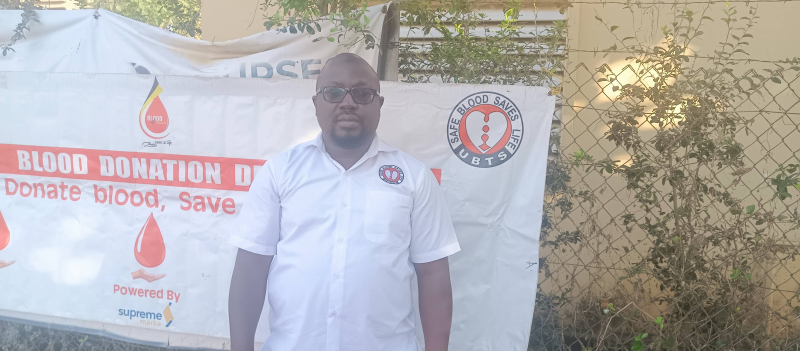
MBALE, UGANDA – After five years of critical shortages that left hospitals paralysed and families grieving, a major increase in government funding and strategic health interventions have dramatically boosted Uganda’s national blood supply, offering a new lifeline for patients across the country.
For years, the cry for blood echoed from hospitals nationwide, with many patients, particularly young children and mothers in labour, tragically losing their lives due to severe shortages. The Uganda Blood Transfusion Services previously collected only about 380,000 litres of blood annually, a figure that fell critically short of the national demand.
However, according to Dr. Bumba Amedi, the manager of the Eastern Blood Bank based in Mbale City, the tide is turning. Following persistent outcry, the government has significantly increased its investment in blood collection, pushing the national annual collection to approximately 460,000 litres.
“This is a significant amount of blood increased in supply,” Dr. Bumba Amedi said, highlighting the tangible impact of the government’s renewed commitment.
The progress is clearly visible in the eastern region. Where the blood bank once struggled to collect around 2,500 litres per month, it now consistently secures about 4,000 litres monthly—a remarkable 60% increase that is directly saving lives.
Dr. Bumba Amedi attributes this success to a multi-pronged strategy led by the government. Key among the interventions is a boost in staffing levels across all blood bank branches in the country. With more personnel, the blood banks can now conduct more outreach drives and reach a larger number of potential donors.
The Ministry of Health has also played a crucial role by intensifying sensitization campaigns promoting healthy living and by distributing free mosquito nets. This preventative approach has, in turn, lowered the demand for blood by reducing severe malaria-related anaemia. The impact of this is acutely felt in the Bukedi region—specifically in districts like Kibuku, Budaka, and Pallisa—which suffered a devastating outbreak of *Plasmodium falciparum* malaria in 2023. That crisis caused severe blood loss in children under 10, with some health facilities reportedly losing two to four children daily who could not get timely transfusions.
Further reinforcing the integrity of the supply chain, Dr. Bumba Amedi noted a reduction in the theft of blood by some medical personnel, ensuring the donated resource reaches the patients it is intended for.
As the life-saving supply finally expands, the government has reiterated a critical message to all Ugandans: blood is a gift, freely donated and freely given. No patient should pay any money for blood in any public hospital. The call now is for continued community support to maintain this positive momentum and ensure no more lives are lost for lack of a safe blood transfusion.








Disqus comments error!
Disqus shortname is required to use Disqus comments. Please ensure you have specify a valid registered Disqus shortname.