
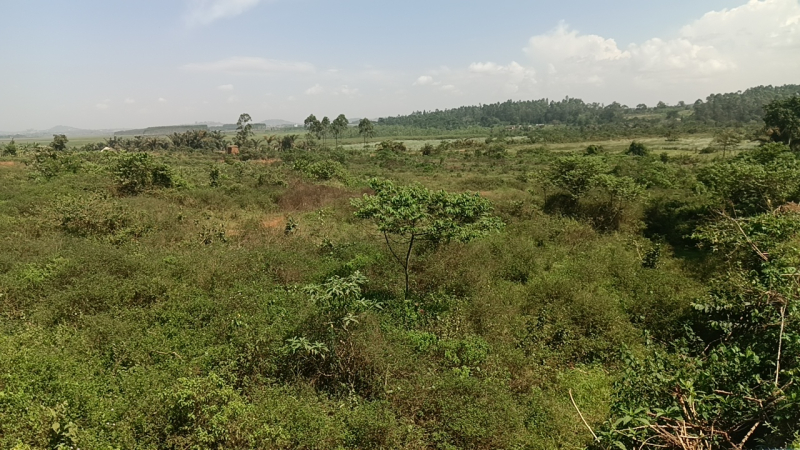
A Shs4.5 billion land acquisition exercise for the expansion of a waste disposal facility in Katikolo, Mukono Municipality, has left a trail of disputed valuations, unpaid compensation and accusations of intimidation, raising fresh questions about how public money is being used to secure private land for the project.
On a humid August morning, municipal officials, security personnel, councillors and journalists walked through Katikolo village, inspecting land earmarked for the expansion of the existing garbage dump.
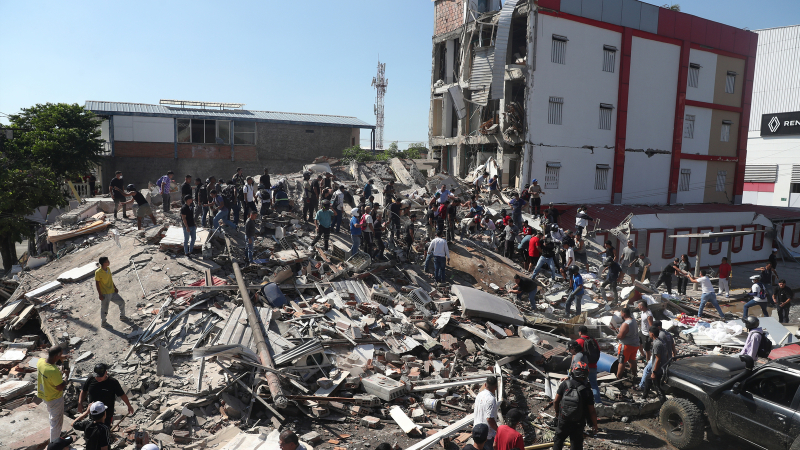
The inspection, led by Mukono Mayor Robert Peter Kabanda, Physical Planner Hillary Mulungi, the town clerk and the District Internal Security Officer, came two years after the collapse of the Kiteezi landfill in Wakiso District on August 10, 2024 a disaster that claimed several lives and forced authorities to redirect Kampala's waste to Katikolo.
The existing Katikolo facility sits on about 7.5 acres. In the aftermath of the Kiteezi disaster, the government provided funds for its expansion, with the municipality seeking about Shs4.5 billion to acquire land and develop a facility covering roughly 40 acres.
But the acquisition process has proved far more complicated than the municipal authorities initially suggested.
A municipal land acquisition report shows that 30.8794 acres had been secured out of a targeted 32 acres through contracts worth Shs4.489 billion.
The same report, however, records outstanding payments, parcels that had not been acquired and other unresolved compensation issues.
Jeremiah Mukasa, for example, received Shs1.351 billion but was still owed Shs53.899 million because of insufficient funds. Moses Kafeero was paid Shs378.908 million, with additional compensation pending a valuation addendum for a structure on his property.
Hadija Nabulya received Shs272.841 million but was awaiting an addendum covering a dug well.
Another Shs68.005 million approved for Twaha Lule and Zaitun Nantume had not reflected on their accounts at the time of reporting.
Beyond those cases, 31 parcels measuring 8.507 acres and estimated at Shs1.103 billion remained unacquired.
The figures appear to contradict earlier assurances by Municipal Environment Officer George Masengere that landowners whose properties had been taken had been fully compensated.
Town Clerk Francis Byabagambi attributed the discrepancies to the lengthy government acquisition process rather than deliberate failure to pay landowners.
He said the municipality initially advertised for willing sellers but received few responses. Officials subsequently approached individual landowners and commissioned valuations.
The payments then had to undergo clearance by the Solicitor General, a process that added further delays.
Some beneficiaries, Byabagambi said, did not have Tax Identification Numbers or bank accounts required for government payments. In other cases, money processed for payment was returned to the treasury because of mismatches in account details.
Byabagambi also rejected allegations that a coordinator, Rita Kabali, demanded kickbacks from residents before helping them access compensation.
He said Kabali's role was to assist residents in obtaining the documentation required to process their payments.
Claims that officials withheld compensation from residents who refused to make side payments remain allegations and have been disputed by the municipality.
On the ground, however, residents gave a different account of the acquisition.
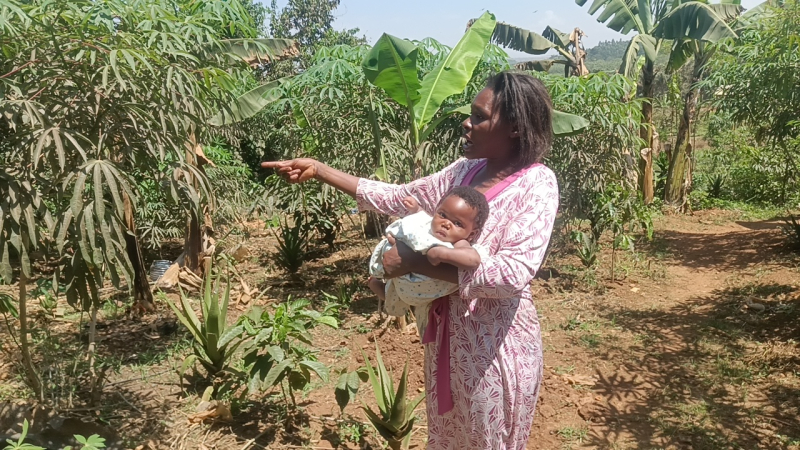
Some accused Mukono municipal officials of using intimidation to pressure landowners and some bibanja owners into surrendering their properties. They alleged that some residents were summoned to municipal offices and pressured to sell off their land.
“Selling is not by force,” one group of affected landowners told officials during the inspection.
Others said the compensation offered did not reflect the value of their land and complained that promised payments had taken too long.
Residents also questioned the transparency of the valuation process, particularly the assessment of permanent structures and crops such as bananas and cocoa trees.
The valuation figures have become another source of suspicion
Municipal records show that Kibirango Yusuf's 0.163-acre parcel was valued at Shs93.88 million, while Kiyanga Robert's 0.049-acre parcel was valued at only Shs4.41 million.
Musiitwa Joseph's 1.48 acres were assessed at Shs222 million, compared with Shs309.38 million for Livingstone Kamwasi's 2.051 acres.
Similar differences appear among other parcels.
Byabagambi said the valuations were determined primarily by the size and location of the land and were carried out by the Chief Government Valuer.
Municipal officials also said differences could arise from land tenure, accessibility and developments on individual properties.
But the underlying valuation reports have not been publicly released, making it difficult for residents or other stakeholders to independently establish how the figures were arrived at.
Physical Planner Hillary Mulungi, who took officials through the site plan, said several factors had contributed to the remaining acquisition gaps.
Among those already compensated, he listed Moses Kafeero, Muhammad Kamoga and Jeremiah Mukasa.
He said some outstanding cases involved mismatched bank account names, couples who had failed to agree on joint accounts and landowners who changed their minds after seeing neighbouring properties compensated.
Others initially rejected the offers because they believed their land had been undervalued or wanted separate assessments for developments on their properties.
Some of the most strategically important land has also proved among the hardest to acquire.
The Mutegeki property, which is required for a lagoon, remains a priority. The municipality now expects to acquire it using local revenue after disagreements over valuation and problems relating to the beneficiary's bank account.
Mulungi said the municipality had ultimately secured more land than originally planned.
Yet the acquisition report leaves an important financial question unanswered: how will the estimated Shs1.103 billion required for the 31 outstanding parcels be financed, and what additional burden will fall on the municipality's own revenue?
Councillor Ramathan Lubowa Kamawu, who represents People with disability said progress had been made but warned that outstanding complaints needed to be addressed if the Shs4.5 billion expenditure was to withstand public scrutiny.
Mayor Kabanda said about 95 per cent of the required land had been confirmed, with the remaining five per cent under final negotiations.
He also said the municipality had acquired a sorting machine intended to reduce the environmental and public health risks associated with the expanded waste facility.
The Katikolo project is not simply an expansion of a dumping ground.
Municipal plans include a material recovery facility and a faecal sludge treatment plant, infrastructure officials say is necessary to cope with the growing volume of waste in Mukono and reduce the health and environmental risks associated with uncontrolled disposal.
The urgency has been heightened by the Kiteezi tragedy, which exposed the consequences of inadequate waste-management infrastructure.
But urgency does not remove the need for transparency.
The municipal acquisition records show that billions of shillings have already changed hands while some landowners remain unpaid and dozens of parcels remain outside the acquisition.
For residents whose land is being taken for a public project, the central question is not whether Mukono needs better waste-management infrastructure. It is whether the people surrendering their land are being treated fairly and whether public funds are being spent according to clear, verifiable rules.
The municipality says the remaining cases are being resolved.
But until updated payment schedules, complete valuation records and a clear account of outstanding obligations are made available, the Shs4.489 billion Katikolo land deal will continue to raise questions over compensation, accountability and the real cost of transforming private land into a public waste facility.







Disqus comments error!
Disqus shortname is required to use Disqus comments. Please ensure you have specify a valid registered Disqus shortname.