
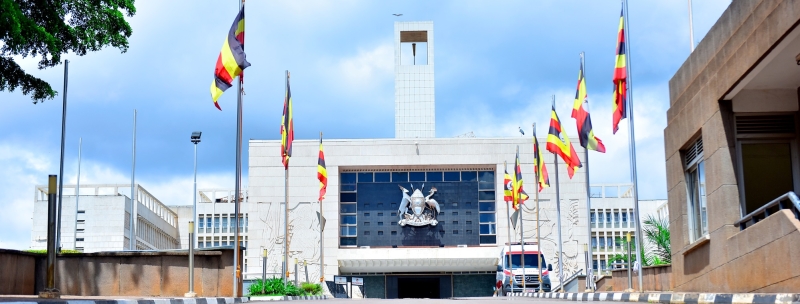
Ugandan business leaders are concerned about the proposed expansion of the national budget, fearing that increased taxation will harm the private sector and hinder economic recovery.
Kampala, Uganda – Business leaders across Uganda are expressing deep concern over the proposed expansion of the national budget, warning that increased taxation in the 2025/2026 financial year will cripple the private sector and derail economic recovery.
The alarm follows Parliament’s approval this week of an additional UGX 4.7 trillion to a supplementary budget, pushing government spending requests for the coming fiscal year toward a staggering UGX 80 trillion. This represents a significant leap from the original UGX 72.3 trillion proposal and raises fears of corresponding tax hikes to finance the expanded expenditure.
Speaking on behalf of the business community, Haji Isa Sekitto, Chairperson of the Kampala City Traders Association (KACITA), criticised the government's fiscal approach. “The government is acting recklessly,” Sekitto stated. “The issues of elections and debt were well known beforehand. You cannot suddenly create a huge budget gap and then force businesses to fill it through heavier taxes.”
Sekitto also turned his criticism toward the Kampala Capital City Authority (KCCA), accusing it of burdening traders with numerous fees for city road use without providing clear accountability or proper service delivery in return. He argued that traders paying various licenses and taxes are being squeezed without seeing commensurate improvements in the business environment.
Economist Dr Fred Muhumuza echoed these concerns, highlighting the immense pressure the new budget places on the tax base. “Of the UGX 72.3 trillion, about UGX 37 trillion is expected to come from domestic revenue. This will require heavily over-taxing the few existing taxpayers, especially businesses,” Dr Muhumuza explained.
The sentiment on the ground is one of fear. Many traders confessed that such increased financial pressure would force them to scale down operations or shut down entirely. “This will finish our businesses,” one trader lamented.
In response to the outcry, Ronald Nyenje, an official from the Uganda Revenue Authority (URA), urged traders to remain calm and focus on fulfilling their existing tax obligations. He emphasised compliance as the immediate priority.
This view was supported by Juliet Okwir Ayo, Deputy Chief Administrative Officer of Tororo District, who called for a strategic shift in revenue collection. “URA needs to intensify efforts to widen the tax net by bringing more eligible taxpayers into the system, rather than overburdening the already compliant few,” she advised.
The approved supplementary expenditure includes several high-cost items that have drawn public scrutiny:
UGX 469 billion allocated to the Electoral Commission.
Funds for the purchase of additional aircraft.
UGX 79 trillion earmarked for the procurement of 7 million anti-malaria bed nets.
UGX 14 billion for palm oil farmers in Buvuma Island.
UGX 300 billion for youth livelihood programs under the Office of the National Chairman.
As the final budget reading approaches, the standoff between the government and the business community intensifies. Traders are demanding fiscal responsibility and a conducive environment for growth, while the state insists on the revenue needed to fund its expanded expenditure plans. The outcome will significantly shape Uganda’s economic trajectory in the coming year.








Disqus comments error!
Disqus shortname is required to use Disqus comments. Please ensure you have specify a valid registered Disqus shortname.