
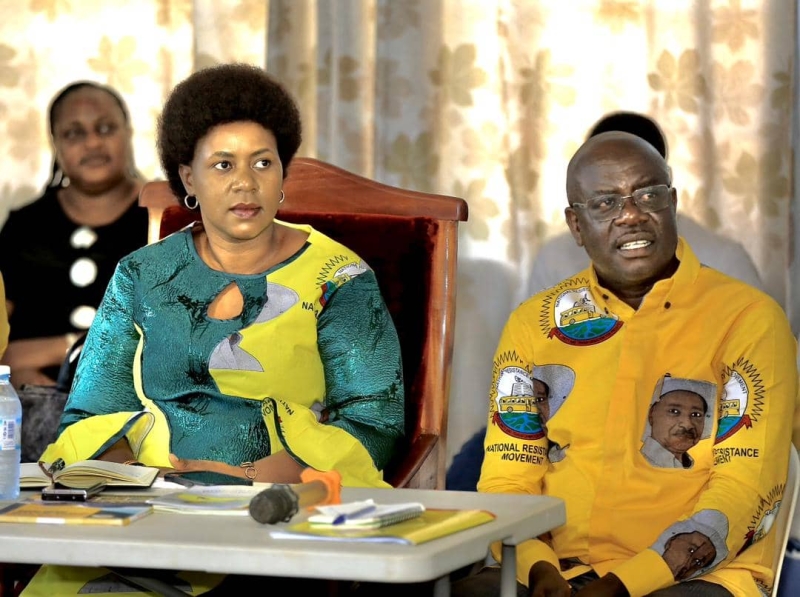
BUSIA, UGANDA – In a move highlighting the complex calculus of political support, teachers in Busia district, under their Uganda National Teachers Union (UNATU) chapter, have declared their intention to rally behind President Yoweri Museveni and the National Resistance Movement (NRM) in the upcoming elections.
This decision was revealed during a meeting between the district teachers’ union leaders and the NRM National Treasurer, Ambassador Barbara Nekesa Oundo. The teachers’ declaration comes despite their open frustration with persistently low salaries, severe understaffing, and chronic resource shortages in government schools.
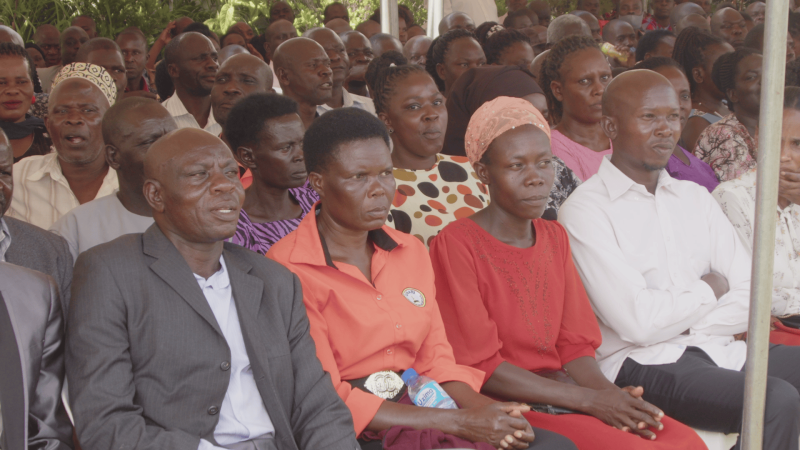
Mr Ojembo, the Busia District Teachers Union leader, articulated the union’s paradoxical position. He acknowledged that arts teachers and primary school educators, in particular, continue to receive “meagre salaries.” However, he stated they are willing to support President Museveni as a strategic gesture.
“We are willing to support M7 in this coming election as a way of pleasing him so that he can think of increasing our salaries next year,” Ojembo said, framing the support as an investment in future gains.
Beyond economic hopes, Ojembo stressed a security rationale unique to the border district. “Security-wise, we cannot allow the opposition to take over a border district like Busia,” he asserted, echoing a common NRM campaign theme about stability.
In response, Ambassador Barbara Nekesa Oundo expressed happiness at the teachers’ declared support “despite the low salaries,” advising that “it is always wise to appreciate the little as you ask for more.”
She acknowledged the government is aware that teachers’ pay is insufficient and reiterated a commitment to eventual increments. However, she placed this promise within a context of competing national demands.
“The same government still has a lot of duties to do,” Oundo stated. “As teachers ask for salary, parents ask for more schools… government has a lot to do but as always, government is government and it will not fail; all will be done.”
Her appeal was ultimately political. She emphasised that what the government needs now is “the support of all people, including teachers, so that it can have another term in office.” She framed the NRM as the only proven choice, stating the party has “no agenda for giving away power to anybody” and is the only entity “tested for the last 40 years” with the capability to deliver.
Ambassador Oundo defended the NRM’s legacy in education, contrasting the present with the pre-1986 era. “Before NRM came to power, Uganda had only 3 secondary schools, which had up to A-Level in the whole country… but now, Busia alone has 15 secondary schools. This means there is improvement in the education sector,” she argued.
She also shifted blame for some local inefficiencies, criticising “district education officials” in some areas for poor school allocation, which creates imbalances, describing it as a “disservice” to the NRM, not a government policy failure.
Pointing to broader national achievements, Oundo cited Uganda’s peace as a key selling point. “Teachers should be proud… Uganda has around 1.8 million refugees in the country, meaning that Uganda is peaceful; that’s why many run to Uganda,” she said, urging teachers to “maintain the peace” by voting for Museveni.






Disqus comments error!
Disqus shortname is required to use Disqus comments. Please ensure you have specify a valid registered Disqus shortname.