
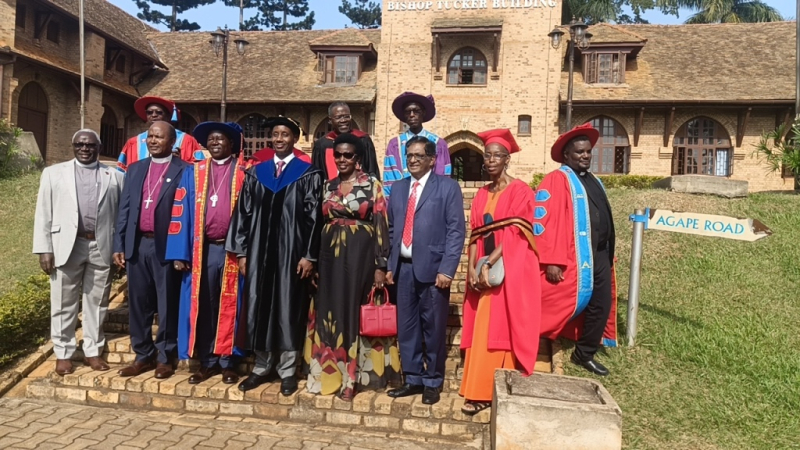
Leaders at Uganda Christian University (UCU) have raised alarm over the unchecked influx of foreign cultural values and potentially harmful content on social media platforms, warning that they are eroding the moral fabric of Ugandan society and endangering the development of young people.
In a strongly worded address during the inauguration ceremony of a new full Professor, UCU Vice Chancellor Prof. Aaron Mushengyezi urged the government and the Uganda Communications Commission (UCC) to step up regulatory measures to protect children from inappropriate material freely available online.
Prof. Mushengyezi, speaking on the topic “The Role of Language in Communication, Human Moral Development, and Cultural Identity Formation among the Youth in Uganda,” highlighted the profound shift in how information and values are transmitted to the younger generation.
“When you move from the oral media format, and then you have to utilize print, broadcast, audiovisual, then you have to be aware that certain aspects of our cultural expression, idiomatic meanings, may be lost,” he said. “We need now to focus a lot on convergence, because we have many tools at our disposal.”
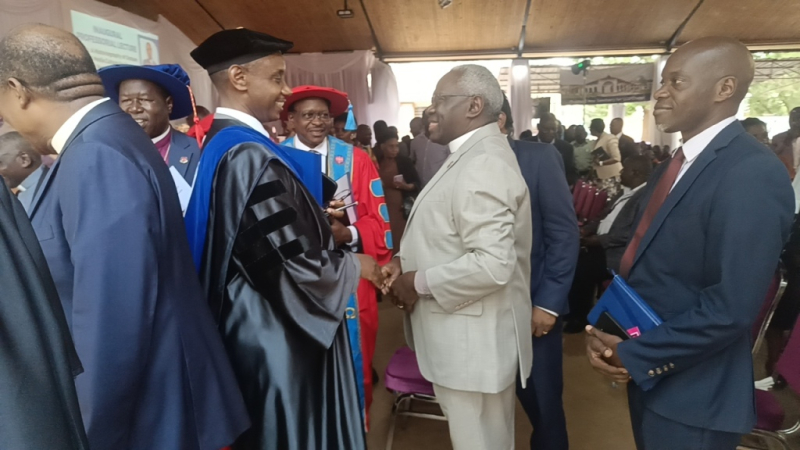
The Vice Chancellor contrasted traditional storytelling where children would sit and listen to grandparents (Jjaaja) or elders (Mbusei) with today’s digital reality dominated by smart phones and social media.
“Jjaaja is no longer there, so now can we create digital Jajas, who can actually bring out this flavor of the traditional way of communicating messages,” Prof. Mushengyezi proposed. “Like in Uganda, you say, the intonation... can now be created through animation, deliberately. And using AI tools, you can even create voices for someone’s own Jaja speaking. That’s the way to go.”
He praised emerging local efforts such as cartoon animations and advertisements that recreate performative elements of Ugandan culture in local languages, but stressed the need for broader, deliberate action to harness technology without losing cultural essence.
Prof. Mushengyezi pointed to global developments, noting that governments in Australia, the United Kingdom, and Canada have begun taking decisive steps including age restrictions on phone access and bans on certain sites after recognizing the dangers of unrestricted online content.
“Some of it is dangerous, some of it feeds children into certain ideologies, which are dangerous for them, for their minds, for their development,” he warned. “If we don’t [act], we will have a generation of people growing up with all sorts of warped ideas, which could harm their minds, but also their formation.”
He referenced Uganda’s existing policy framework, including a government white paper and provisions under the Universal Primary Education (UPE) curriculum for teaching in mother tongues from Primary 1 to Primary 4 before transitioning to English. While acknowledging implementation challenges, he emphasized the importance of strengthening these efforts in the digital space.
Prof. Mushengyezi called on educators, communicators, and young consumers alike to embrace media convergence responsibly. He suggested that institutions like the UCC could collaborate with universities to develop AI-driven educational content and curricula that prioritize appropriate material in local languages.
The Chairperson of the UCU Council and Bishop of Lango Diocese, Prof. Alfred Olwa, reinforced these concerns, cautioning that children inevitably become what they see and hear.
“Children should be intentionally guided and nurtured in ways that help them develop wisdom so that they can become useful and responsible members of society,” Bishop Olwa said.
The university leaders’ remarks come amid growing national and international debate over the impact of social media on youth mental health, cultural identity, and moral development. With rapid smartphone penetration across Uganda, many parents and educators share worries about exposure to Western content that often conflicts with traditional African values around family, respect, sexuality, and community.
UCU’s call adds to mounting pressure on the UCC and the Ministry of Information and Communications Technology to enhance content regulation, promote digital literacy, and support the creation of culturally affirming local content.
As Prof. Mushengyezi concluded, the evolution of media presents both challenge and opportunity. “There is evolution that’s happening, and we must now use convergence to get the best out of it,” he said.











Disqus comments error!
Disqus shortname is required to use Disqus comments. Please ensure you have specify a valid registered Disqus shortname.