
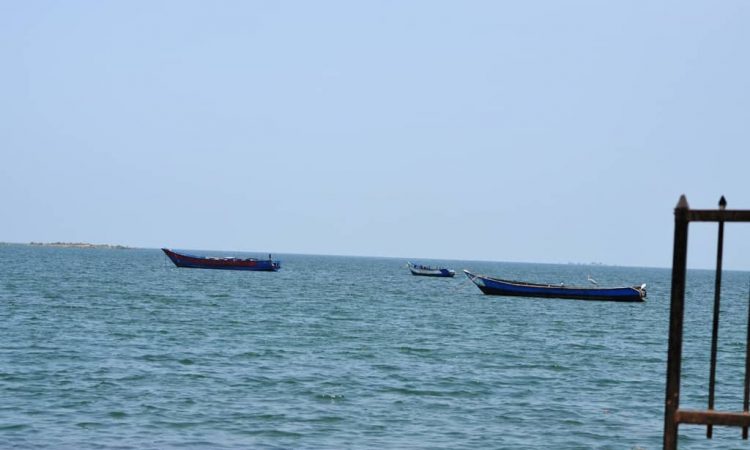
Communities in Elegu, Uganda, and Nimule, South Sudan, are strengthening their preparedness for recurrent flash floods following a joint awareness and stakeholder engagement campaign led by the NELSAP Coordination Unit (NELSAP-CU) and Uganda’s Ministry of Water and Environment under the Regional Climate Resilience Program (RCRP).
The campaign focused on improving public understanding of the Nile Basin Flash Flood Early Warning System (NB-FFEWS) and supporting community participation in the development of the proposed Transboundary Flood Management Plan for the Unyama/Ame River Catchment.
Located along a busy border corridor linking Uganda and South Sudan, Elegu and Nimule frequently experience flash floods during heavy rains, affecting homes, businesses, transport, and livelihoods. Residents continue to face challenges related to flooding, poor drainage, and limited access to timely and understandable warning information.
Although the NB-FFEWS can issue flood alerts up to 48 hours in advance, awareness and response to these alerts within communities has remained limited due to low public understanding, language barriers, and limited access to digital communication channels.
During the mission, stakeholder meetings were held with local authorities, technical officers, community representatives, school leaders, faith-based institutions, and traders from both border towns. The discussions provided an opportunity for communities to share experiences, identify key flood challenges, and contribute feedback on proposed flood management measures for the Unyama/Ame River Catchment.
The engagements also emphasized the importance of coordinated flood preparedness and response between Uganda and South Sudan, particularly in border communities where flooding affects movement, trade, and public safety on both sides.
As part of the awareness campaign, community radio sensitization programs were conducted to help residents better understand flood alert messages and appropriate response actions during emergencies. The radio programs allowed community members to call in, ask questions, and discuss practical safety measures to take when warnings are issued.
To improve outreach and message retention, flood awareness jingles were produced and aired in both English and Luo across local radio stations serving the affected communities. The jingles encouraged residents to pay attention to flood alerts, follow safety guidance, and respond early during heavy rainfall periods.
NELSAP-CU also distributed four categories of flood awareness materials, including Flood Alert Posters, School Awareness Posters, Community Awareness Leaflets, and Fact Sheets for local authorities. The materials were distributed across schools, churches, markets, town council offices, and public notice boards in Elegu and Nimule to ensure flood preparedness messages remain visible and accessible within the community.
Under the campaign, officials involved in the mission noted that communities demonstrated strong interest in receiving localized and simplified early warning information, particularly through trusted communication channels such as radio and local leaders.
The campaign forms part of broader efforts by NELSAP-CU and partner countries under the Regional Climate Resilience Program to strengthen transboundary flood management, improve community resilience, and bridge the gap between technical early warning systems and local response capacity.
Further engagement with district disaster management structures, schools, and community leaders is expected as part of ongoing efforts to strengthen preparedness and reduce flood risks within the Unyama/Ame River Catchment.






Disqus comments error!
Disqus shortname is required to use Disqus comments. Please ensure you have specify a valid registered Disqus shortname.